12 NOVEMBER 2026
AI is changing how brands create content for advertising
In 2026, around 3 in 4 marketers use AI to create content, including images and videos and consumers have noticed. According to IAB, 71% of Gen Z and Millennial consumers say they have already seen an AI-generated ad, a significant increase from 54% in 2024. This is a clear sign of how widely AI-generated content is spreading across social media feeds and display campaigns.
The impact goes beyond image generation: 67% of marketers say they use AI to create or enhance images, while 37% use it for video production and 21% for audio. However, the most interesting data concerns the purposes behind AI adoption. Advertisers primarily use AI for social advertising (85%) and display (73%), while 56% apply it to TV ads and 42% to audio ads.
These figures highlight just how widespread AI has become in advertising, making it increasingly important to understand how to use it effectively.
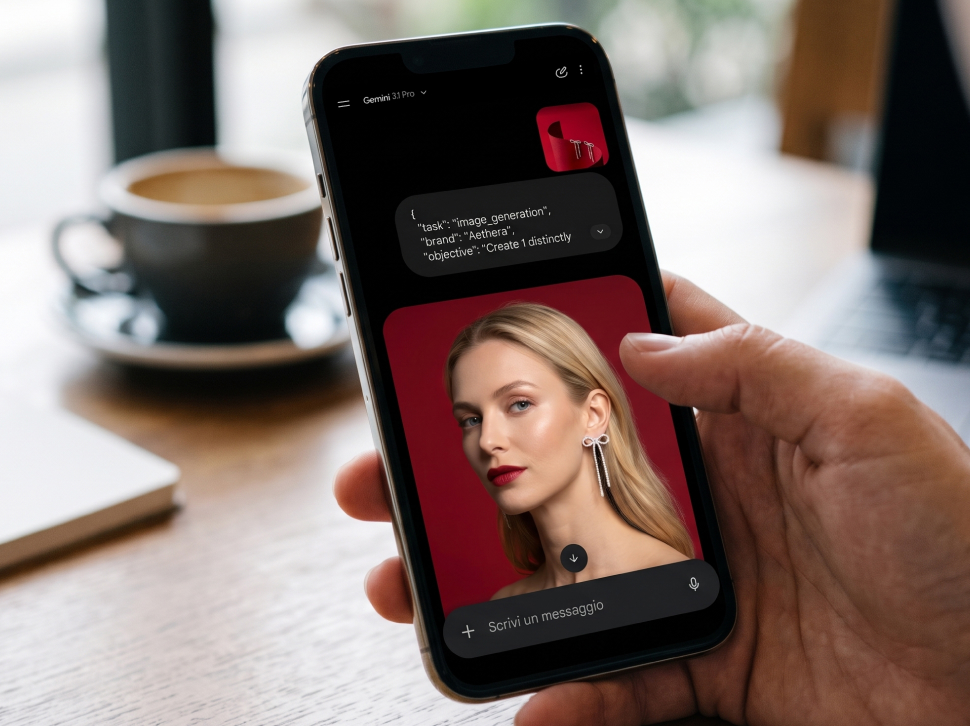
AI-generated images are becoming increasingly faithful to creative vision
Image generation is where the evolution of AI models has been most evident. In just a few years, the quality has improved dramatically. This is not only reflected in far more photorealistic results, but above all in the ability of newer models to interpret a brief, preserve the key elements of a scene and accurately follow even complex creative directions.
For example, Nano Banana, the model powered by Gemini 2.5 Flash Image and launched in August 2025, had already introduced significant conversational editing capabilities and a good ability to keep people and subjects recognisable across successive edits. However, it still had some limitations in more complex workflows, particularly when combining multiple reference images or preserving every detail of a product accurately.
With the more recent version, Nano Banana 2.1, these capabilities have been progressively enhanced, further improving visual quality, realism, prompt adherence and consistency between successive revisions. One of the most significant developments is the ability to combine up to 14 reference images while maintaining the fidelity of up to 10 objects. This makes it possible to work with greater precision, even on products with intricate details.
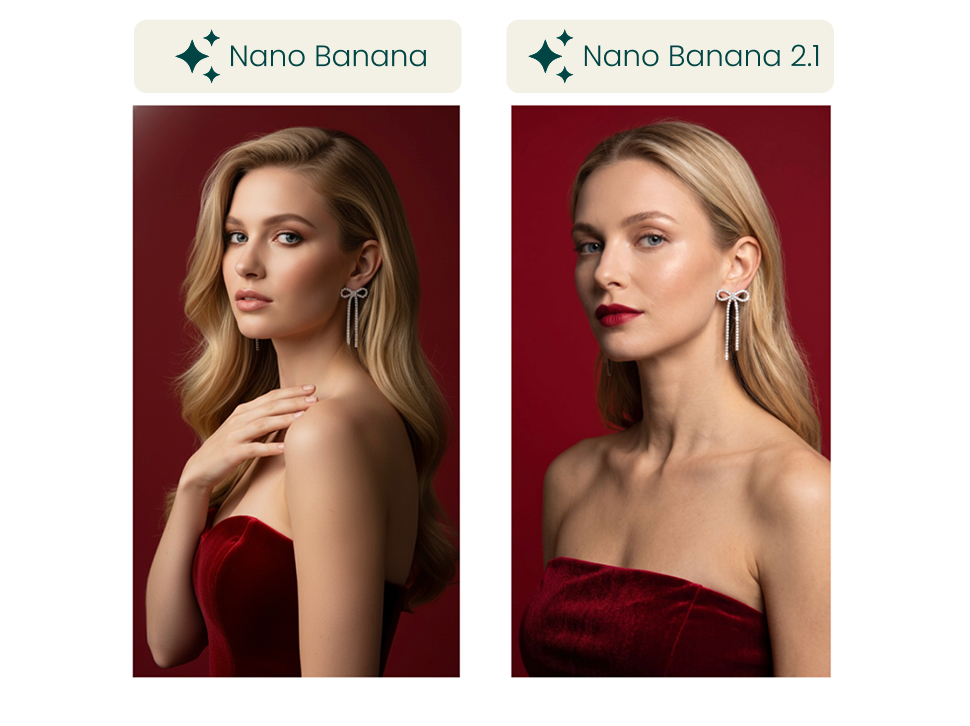
What has changed in image generation models?
The latest models have mainly improved in four areas:
- Prompt understanding: Newer models can interpret even complex prompts more accurately, combining subjects, settings, composition, lighting, materials and stylistic references in a way that is more consistent with the intended creative direction.
- Subject consistency and revision management: The latest models make it easier to preserve the characteristics of the same product, face or visual style across different generations.
- Image editing while preserving existing elements: One of the most significant advances concerns editing capabilities. It is now possible to modify specific elements, replace a product, change the background or refine a detail while preserving as much of the original composition as possible. This allows for progressive changes without losing elements that have already been approved, making the creative process more controlled.
- Greater control over text, details and composition: The rendering of lettering, graphic elements and complex details has improved.
Human review nevertheless remains essential to ensure that logos, packaging, product names and product information are accurate, as AI can still make mistakes at this stage.
AI video production is also becoming faster and cheaper
Video is one of the most promising areas in the evolution of AI-powered creativity. According to IAB, 86% of advertisers running video campaigns say they are already using or planning to use generative AI to create video assets, pointing to strong momentum behind its adoption.
A similar evolution to the one seen in image generation can be observed in ByteDance’s family of video-generation models: Seedance. The first version, Seedance 1.0, introduced in June 2025, could already generate Full HD videos from a text prompt or an image, with sequences lasting up to 10 seconds and multiple camera cuts within the same video. The model offered good motion stability and the ability to create content in different visual styles, but was primarily focused on generating the visual component. It also offered less precise adherence to the original storyboard.
With Seedance 2.5, introduced in July 2026, the possibilities have expanded considerably. The model can generate videos with integrated audio lasting up to 30 seconds in a single generation, extend sequences through multiple iterations and handle complex stories across several scenes, maintaining greater consistency between characters, settings and shots. It is also possible to use up to 30 images, 10 videos and 10 audio tracks as references within the same workflow, as well as make targeted edits to specific moments in a video. More advanced features also include green-screen functionality and camera perspective control.
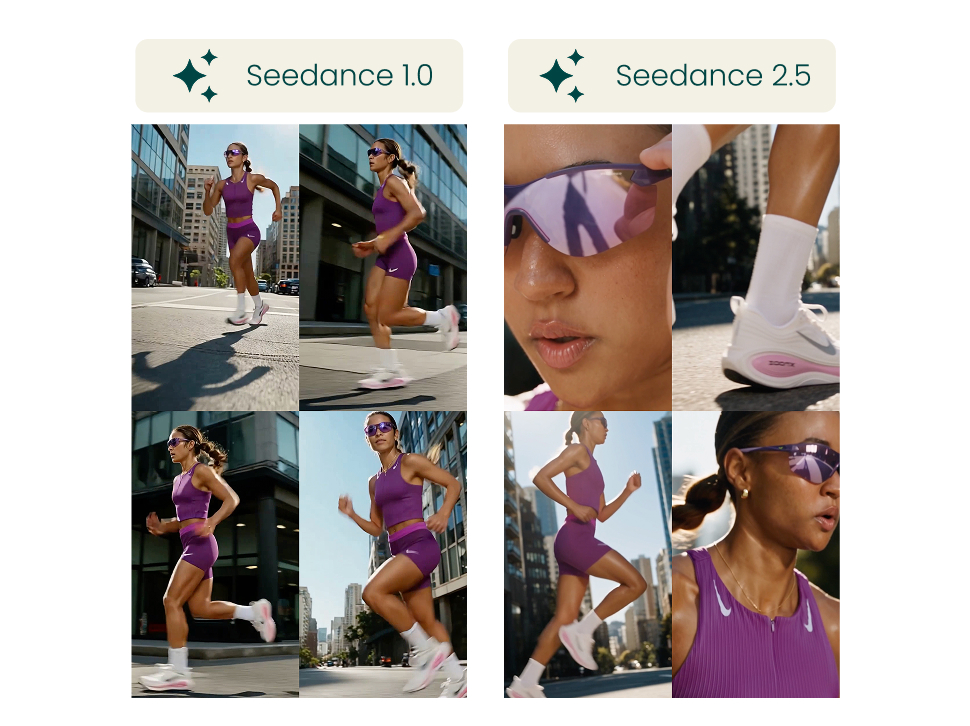
What has changed in video generation models?
The first generation of AI video models could produce short clips, but had clear limitations, including unrealistic physics, unnatural movements, difficulties maintaining consistency between frames, no audio and limited control over the scene.
Today, newer models make it possible to:
- Animate static images: Turn a product image or campaign visual into a moving sequence.
- Create lifestyle videos and product storytelling: Build settings, camera movements and narrative scenarios without having to produce every single scene through a traditional shoot.
- Develop UGC-style creative: Create concepts and variations using formats and visual languages native to social media, including AI avatars.
- Adapt a master video into multiple cut-downs: Meet the creative requirements of Performance Max, Demand Gen, Meta and TikTok campaigns, which increasingly call for a wide range of creative variations.
- Personalise content: Create creative variations for different markets, audiences and distribution contexts.
All this can be achieved while maintaining:
- Temporal consistency: Subjects, environments and objects remain stable throughout the scene.
- Physics and realism: Movements, interactions and dynamics appear more believable.
- Creative control: Camera movements, style, pacing, actions and scene details can be guided with greater precision.
- Native audio: Dialogue, ambient sounds, effects and music can be generated alongside the video.
AI audio opens up new possibilities for brand communication
Audio is still the least explored format when it comes to AI-powered content creation. According to Social Media Examiner’s 2026 report, only 21% of marketers say they use these tools to create or enhance audio content, while 45% would like to learn how to do so, signalling growing interest in this format.
Today, AI makes it possible to create:
- Voice-overs and synthetic voices: Generate narration for videos and advertising, with control over pace, tone, intent and expressiveness.
- Localisation and language adaptation: Produce versions of the same audio and/or video in different languages and adapt content to target markets.
- Integration with generative video: Some systems allow video and audio to be generated within the same workflow, opening up interesting possibilities for advertising content that is ready to go live.
What has changed in AI audio models?
AI audio has moved beyond the stage of robotic, flat and inexpressive voices. The latest models can interpret context, emotion, pacing and communicative intent.
ElevenLabs, for example, introduced Eleven v3 as a more expressive text-to-speech model, supporting over 70 languages, multi-speaker dialogue, emotional control through audio tags and more natural-sounding speech. The model allows users to direct vocal delivery through instructions such as whispering, shouting, laughing, sighing or changing tone, bringing the output closer to traditional voice direction.
For an e-commerce business, AI audio can be particularly useful for product demos, tutorials, UGC-style videos, international campaigns and the rapid adaptation of social media content.
-
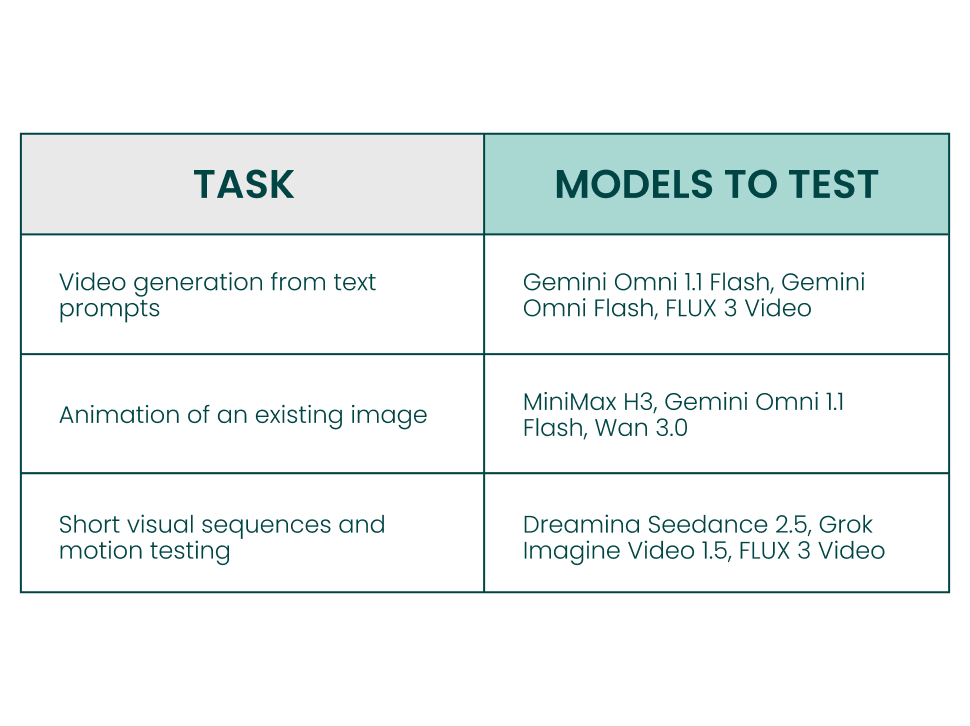
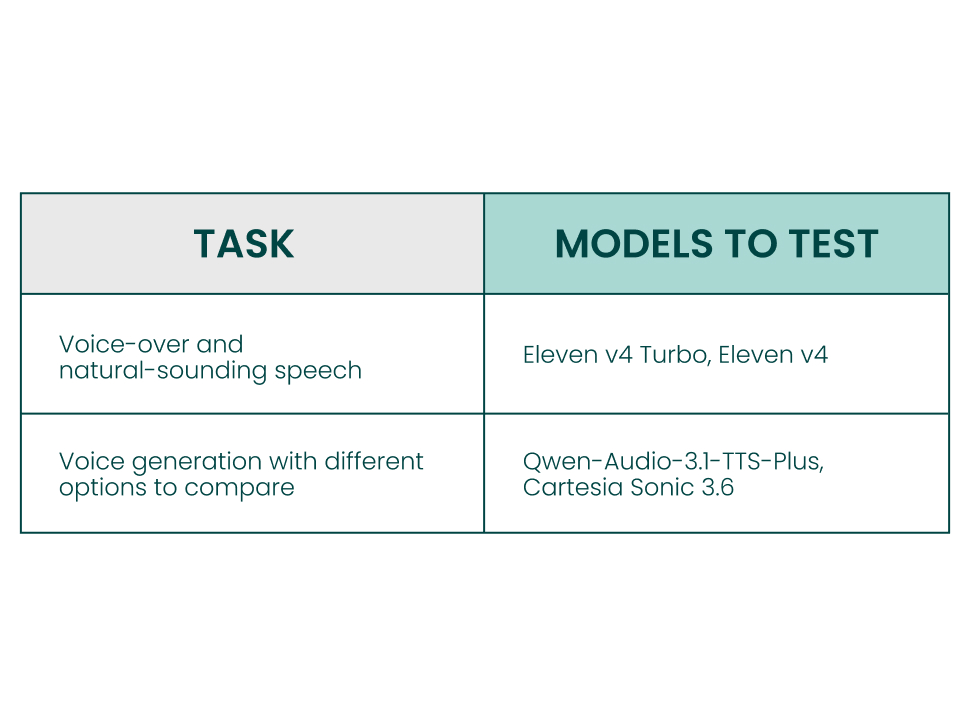
So, which model should you choose? A practical guide
There is no single best model for every task, as performance varies depending on the intended use. To build an initial shortlist, we considered the rankings published by Arena, formerly known as LMArena, which compares models based on user preferences in head-to-head evaluations. For audio, we instead used Artificial Analysis’s Speech Arena, which focuses specifically on voice generation.
It is important to note, however, that the tables below reflect the rankings available at the time of writing. They should not be considered definitive or permanent, as the AI landscape is evolving rapidly and rankings may change as new models are released.
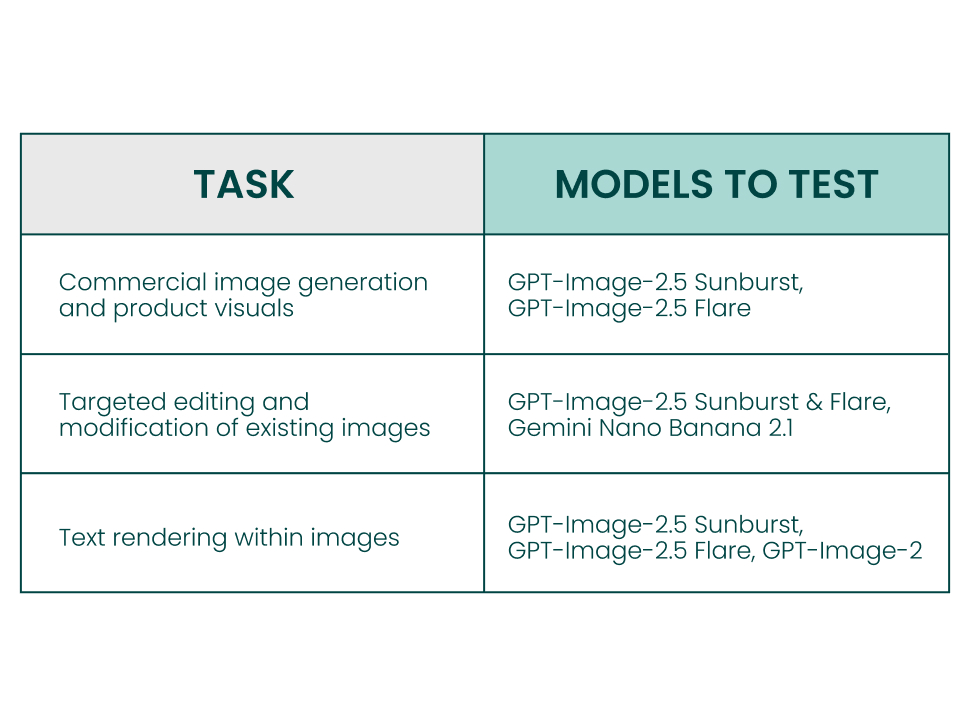
-
What’s next: AI is moving into advertising platforms
-
The next stage of evolution is not just about the ability to generate content, but also about how that content is developed, distributed and optimised. Major players are integrating generative tools directly into their advertising ecosystems, bringing the creative process ever closer to campaign activation.
Google is bringing these capabilities to Asset Studio within Google Ads, integrating models such as Gemini, Veo and Nano Banana to create and refine assets within a single platform. OpenAI is also expanding the capabilities of ChatGPT Ads, introducing new tools for ad creation and conversational formats.
The direction of travel points towards an increasingly close integration of creative generation, distribution and performance optimisation. For brands, this could mean moving beyond uploading individual images or videos and instead providing a more complete system, built around visual identity, creative guidelines, product data and business objectives. Platforms will then be able to help generate, adapt and activate creative assets in an increasingly integrated way, reducing the gap between ideation and campaign launch.
Transparency, the AI Act and consumer trust
As AI becomes more prevalent in ads, transparency is becoming increasingly important — not only for regulatory reasons, but also because of its impact on the relationship between brands and consumers.
At European level, Article 50 of the AI Act, which applies from 2 August 2026, introduces specific transparency requirements and distinguishes between providers of AI systems and those who use them. In particular, providers of systems that generate synthetic audio, images, videos or text must ensure that their outputs are marked in a machine-readable format and can be detected as having been artificially generated or manipulated. For those using these systems, the obligation is to disclose the artificial origin of audio, visual or audiovisual content that constitutes a deepfake — that is, content that could be mistaken for authentic material. Specific requirements also apply to the publication of AI-generated text on matters of public interest when there has been no human editorial review or control.

This does not mean that every piece of AI-generated content must carry a visible label. Requirements vary depending on the nature of the content and the role of the party involved.
Platforms are also introducing tools to make transparency easier. Since July 2026, Google Ads has allowed advertisers to add text or visual labels directly to advertising creatives generated or edited with AI. The platform may also automatically apply certain labels to assets created using its own generative tools. These features are designed to facilitate regulatory compliance, but they do not replace the need to check which obligations apply to each individual campaign.
However, transparency is not just a regulatory issue: it also plays a role in building trust with audiences. According to an IAB study from January 2026, 73% of Gen Z and Millennial consumers say that knowing an ad was created with AI would either increase or have no impact on their likelihood of making a purchase. Furthermore, more than half of respondents would like to be informed when an ad is entirely AI-generated or uses synthetic images and videos.
Making AI use recognisable does not necessarily mean compromising the effectiveness of a creative asset. On the contrary, transparent communication can help build a more informed relationship with audiences.
Creative direction remains the real competitive advantage
Generative AI reduces some of the barriers to content production, speeds up iterations and makes creative possibilities more accessible — possibilities that previously required greater time, expertise or budgets.
But having access to more powerful tools does not automatically lead to better content.
The WARC and TikTok research mentioned at the beginning illustrates this gap: although 88% of marketers have increased their creative output thanks to AI, only 45% report a significant improvement in quality.
The difference lies not only in the ability to generate content, but in understanding what content makes sense to create, for whom and with what objective.
Human input remains essential when it comes to defining strategy, identifying insights, interpreting cultural context, establishing a creative direction and assessing whether the final result is truly consistent with the brand.
In this scenario, AI is an enabler: it expands execution possibilities, accelerates experimentation and helps make better use of resources. Strategy, creative sensitivity and quality control remain the elements that turn these possibilities into effective communication.
CASE STUDY
Santoni
Driving efficiency and revenue with SA360
CASE STUDY
Passione Beauty
How to increase brand visibility on ChatGPT